Blue Beach / Karyn Parsons / Book Review
BLUE BEACH
Fifteen-year-old Blue Collins can't wait for this summer to begin. As the daughter of the owner of Santa Monica's only Black beach, she's practically a summer queen. She'll be spending hours in the waves, sunbathing on the shore, and helping her mother run the stand where they sell refreshments. And with the summer kick-off parade just finished, she can feel summer in the air. Everything's great.
Until Blue and her beau Ben find the body of Dottie Whitehouse, a white debutante, washed up on their beach.
The local, white property owners don't like having a Black beach in the neighborhood. The future of Blue Beach is always a little... uncertain. Something like a body washing ashore? It could kill her mother's business. Which means one thing: Blue and Ben move the body into the waves. But when it washes ashore on the nearby white beach, evidence points to tampering... and all eyes land on Ben.
Until Blue and her beau Ben find the body of Dottie Whitehouse, a white debutante, washed up on their beach.
The local, white property owners don't like having a Black beach in the neighborhood. The future of Blue Beach is always a little... uncertain. Something like a body washing ashore? It could kill her mother's business. Which means one thing: Blue and Ben move the body into the waves. But when it washes ashore on the nearby white beach, evidence points to tampering... and all eyes land on Ben.

THOUGHTS
It's not often that you find historical fiction in YA, and it is even rarer to find historical fiction set in the 1920s. And you know what? This is a good book, not just because it fills a very obvious gap. It's got a good murder mystery hook, and it has the follow-through to make it satisfying. Which is all one can ask.
It's not often that you find historical fiction in YA, and it is even rarer to find historical fiction set in the 1920s. And you know what? This is a good book, not just because it fills a very obvious gap. It's got a good murder mystery hook, and it has the follow-through to make it satisfying. Which is all one can ask.
PROS
| Underrepresented | I really liked that the historical fiction market is moving away from WWII content. Not that WWII isn't an important time period. It obviously is. Ramifications of this war will echo for a long, long time to come. But that doesn't mean we should neglect other eras. Especially in YA, where historical fiction is already lacking, finding a gem like this that explores a different era is really nice. And not only is the 1920s a new and exciting historical prospect, but this is a book that centers around Black lives in the 1920s. In a genre most definitely dominated by white perspectives, this is a great find as well. It's different. It's new. It's necessary, and Karyn Parsons does a great job of really making this snippet in history come alive--while also providing exactly the hooks the current teen readership would want to keep invested. |
| Local Tensions | This is a beach read, and it's a seaside murder mystery. So it's the perfect summer read on both front. But it also doesn't neglect the more serious bits of its specific history. Blue Beach is a Black-owned beach, one of very few in the area and at the time, and that doesn't exactly make the (white) neighbors happy. Even before the body washes ashore, there are tensions. On top of being a Black-owned beach for Black beachgoers, Blue Beach is also a woman-owned beach. Blue's mother is a business woman, running the convenience stand at the beach. It is her vision here that has been brought to life. The neighbors are okay with it... until they aren't. They might all claim that the Klan isn't local (that's a Southern thing, after all, and not a thing that happens in civilized California), but when the tension gets high enough, true colors might just show... |
| Imperfect | We'd all like to think we'd make the perfect choices when we get implicated in a murder, right? But let's face it. We probably wouldn't. Panic is a big factor, after all, and it is even more of a factor in a world that already doesn't like presuming your innocence (like, for instance, if you're a young Black man in 1920s California). Especially with young and inexperienced characters, making questionable choices should be par for the course. Do these characters make bad choices, the kind that will look very bad if they're uncovered? Absolutely. And does it make sense for them to make these choices? Undoubtedly. And do these choices come back to hurt them? Well, you'll just have to read it to find out... |
CONS
| This is a murder mystery, right? So there is a grand killer reveal that happens. That's one of the genre conventions. And it makes sense that this killer did what they did, but... it wasn't exciting. It's like listening to a true crime podcast and finding out that yes, her jealous boyfriend did kill the murder victim. It's expected. It's realistic. It's unfortunate, but also just kind of what it is? So it makes sense, but you don't necessarily read a murder mystery for it to make sense. You want a twist. You want that *gasp* moment that all the build-up in the plot is leading toward, and I just didn't get that here. | Fine, I Guess... |
| I don't ever like to say that a woman is "too much," because it screams of misogyny (and particularly misogynoir), so please know that I am writing this critique with caution. Blue's cousin Rita did, at times, feel a little too much... for my personal taste. She was a bit grating, a bit chafing for my reading sensibilities. I think it was perhaps because she is the most colloquially 1920s in her dialogue. It felt like an over-the-top caricature of the dialogue. It felt like reading in a different font. Do I think it was entirely incorrect? No. I think there definitely could have been young people like this. We've all known people who talk more slang than anything else. But in the context of a novel where everyone else doesn't quite speak this way, it did start to feel a little... exaggerated. The bubbly, outgoing, 1920s party-girl that is Rita is a great concept, especially in a book like this that might otherwise have been lacking in a bit of levity. But it didn't feel quite balanced with the rest of the book's characters. | A Bit Much |
| As much as I want to believe in happy endings, this book doesn't feel like it should have one. Or, it shouldn't have one that is quite so... tidy. Everything wraps up so nicely. All the bad choices can be overlooked. We can laud people as heroes because they found the truth (even though we know, in reality, that the truth doesn't always outweigh the prejudice). I like a happy ending ,but sometimes a happy ending isn't as satisfying as a more nuanced take. And that was the case here. We were definitely missing some of the ramifications that would have made this plot great, and so it must instead just be relegated into the "good" territory. | Tidy |
Rating
⭐⭐⭐⭐⭐⭐⭐⭐
8/10
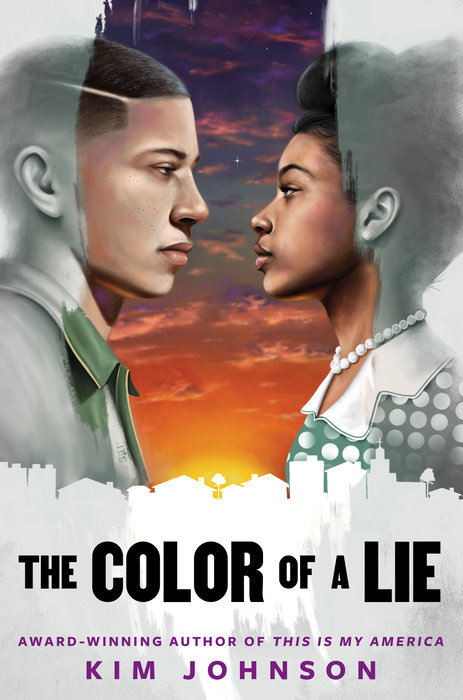
Fans of Richard Wright's Native Son might like this better-for-a-younger-audience bit of historical fiction. Those who liked Kim Johnson's The Color of a Lie will love jumping into a bit of Black experience that doesn't usually make it to mainstream publishing.

|
Details
|
Note: I was provided with an ARC by the publisher through Netgalley in exchange for an honest review. All opinions here are my own. |


This sounds like a great read! Wonderful review E.R.
ReplyDeleteI do think it's nice to get historical fiction set in the 1920s when a lot seems to be set in the WWII era instead. Yes, it can be grating when dialogue feels unnatural and over-the-top. Glad to see this was a hit despite that!
ReplyDeleteYou have tremendous talent at doing reviews! Thank you for sharing.
ReplyDeleteEven with the few issues it still sounds like a good read.
ReplyDeleteOh this sounds as a good interesting book
ReplyDeletethank you so much for your review
What a cool concept!
ReplyDeleteThat sounds like a good one. I think I would enjoy this.
ReplyDeleteWhenever I have read YA historical it had been WW1 so I get it
ReplyDeleteI was blue
ReplyDelete