What Feeds Below / Tatiana Scholte-Bonne / Book Review
WHAT FEEDS BELOW
At the edge of the City of the Void, a massive chasm yawns, a dark expanse stretching deep into the earth. Carnivorous plants, vicious monsters, and creeping fungi reach toward the light, protecting the ruins of an ancient civilization at the bottom of this pit. And orphaned teenagers (and best friends) Petra and Jade are here to be your tour guide to the bottom.
There aren't a lot of jobs in the City that don't involve diving into the Void, and taking treasure-seeking tourists down is the best way Petra and Jade have to pull themselves out of the slums for good. Petra prefers to play it safe, stick to the upper levels of the Void even if the payout is smaller. Jade is ready to risk the descent all the way down to the bottom; the deeper they go, the quicker they will find themselves set for life.
When a tourist comes along seeking to go deeper than the girls have gone before, they snatch up the job. Petra might not be ready to go to the bottom, but one level deeper isn't too big a stretch. But even one step beyond known territory can be deadly, and when this job goes horribly wrong, Petra finds herself alone in the Void, without the tourist and without Jade. And saving her best friend means plunging deeper into the dark than she's ever dared before...

THOUGHTS
I wouldn't recommend this book for YA readers. At all. But for general horror fans... I would very much recommend. It's got the kind of graphic gore and body horror that I don't think the average YA reader wants to encounter; if they were so inclined, they'd probably be looking in the general horror section anyhow. So the marketing here is iffy. But the book itself is great, with the kind of cosmically provocative worldbuilding and messily unreliable leads that can really get a reader tangled up in a fungal web its impossible to escape. And that's what fungal horror's all about, right?
I wouldn't recommend this book for YA readers. At all. But for general horror fans... I would very much recommend. It's got the kind of graphic gore and body horror that I don't think the average YA reader wants to encounter; if they were so inclined, they'd probably be looking in the general horror section anyhow. So the marketing here is iffy. But the book itself is great, with the kind of cosmically provocative worldbuilding and messily unreliable leads that can really get a reader tangled up in a fungal web its impossible to escape. And that's what fungal horror's all about, right?
PROS
| The End | YA horror and general horror books differ in a few ways, and one of those differences comes down to the ending. A genre horror book doesn't have a happy ending. It doesn't have a happy-for-now ending. The brightest endings in horror come with dark undertones, and that's by design. It's generic convention, and pushing outside of that convention might mean pushing into a different genre space entirely. YA horror differs from general horror because it tends to end a bit more optimistically, and so a YA horror fan might be left a bit perturbed by the ending on this one. It's dark. It's bitter (not bittersweet; just straight up bitter). It's not a YA horror ending but a properly hopeless and dark genre ending, and I liked that. It's nice to find a horror author willing to play with the readers, to give them what they hope for in an ending before taking it all away again. |
| Fungal Friends | The worldbuilding in this book is awesome. It's so rare that I come across a book where the setting is both inexplicable and evocative, so evocative that the utter lack of how and why are irrelevant. This is a sinkhole full of horrors, layers of infestation and rot. It's full of creeping fungi and mutilated bodies, of carnivorous beings ready to devour (and then repurpose) those who stumble into the dark. Bodies are everywhere, but they're not just bodies. They're being recycled into the ecosystem of the Void itself, consumed and repurposed in incredibly gross ways that are both predictable and novel. It's bioluminescence and the stench of decay. It's the ineffable descent into an endless darkness, of drowning and claustrophobia and getting lost without the light to get yourself back out again. It's like a catacomb but one made entirely by nature, not by human hands. And that's disturbing and disgusting, just as it should be. |
| Epigraph Guides | Each chapter in this book comes with an epigraph, and each epigraph adds to the dark and unsettling worldbuilding already at play. They're excerpts from religious texts, from lost journals, from the belongings of blood-splattered remains that have been recovered. They're excerpts from Petra herself, written down (or, perhaps, recorded how she hopes to write them down) for posterity. They're calls for help. They're bits of lore. They're body-horror snippets wrapped in personal narratives. And they add so much to the overall experience of reading this book. I always like an epigraph, but especially a well-done epigraph. And these are so, so good. |
CONS
| This book is a bloody mess, and while that aligns with my own personal reading tastes, it isn't for everybody. Especially if a book is being marketed as YA. This book takes body horror to the extreme, and it starts that way. It doesn't work up to it. So if you're squeamish, especially about eye stuff, I would recommend you set this one aside and don't look back. The gore is... gory. | Bloody Mess |
| There's a revelation in the finale of this book that the book really works up to, and while Petra didn't see it coming, as a reader, I definitely felt that something of this nature was on its way. And I think that's intentional. Petra is a generally wary and untrusting character, but she has her blind spots (blind spots the reader doesn't necessarily share). So I knew where we were headed, though the breadcrumbs laid along the way are done well. But as we were building up to it, I had a lot of time to think about what all those pieces might be, and my imagination was twistier than the actual revelation. So don't get me wrong; the revelation works. But it wasn't quite as convoluted as I could have hoped, since I was working on the puzzle throughout the whole book, and with a book that otherwise spends so much time dawdling in the details, this felt almost like a missed opportunity. I wasn't disappointed, but I wasn't blown away. | Not So Convoluted |
| The Void is a dangerous place, no matter what level someone's on, and that's made abundantly clear by the creatures encountered and the stories told throughout the book. But when Petra gets separated from Jade after a rather... unfortunate incident with a tourist they've taken down to the third layer, she has to crawl back out all on her own. And this... doesn't take up a lot of time in the book. Which I get. That's not where the meat of this story is. But for such a harrowing travail, I think it should have been allocated a bit more page space. It just doesn't feel as arduous as it is, as it should be. Especially because Petra's never been that deep before. It's a monumental occasion, reaching the third layer, and it's a monumental occasion, ascending again alone. And because we don't linger here, we don't quite feel how momentous this is. Sure, it is nothing compared to how deep we plunge later in the book, but that just means these early challenges should feel easy in retrospect, not in the moment. | Challenges Quickly Overcome |
Rating
⭐⭐⭐⭐⭐⭐⭐⭐⭐
9/10
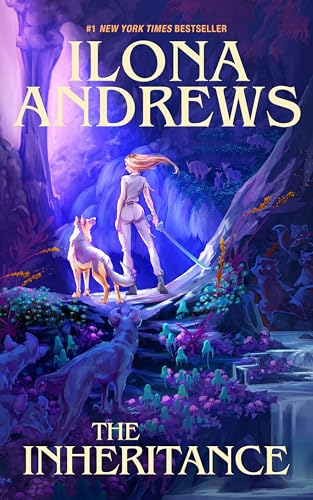
Fans of Ilona Andrews's The Inheritance will like the dark flora and fauna of this subterranean space. Those who enjoy the universe of The Last of Us in all its forms will like the fungal nightmare of this dangerous cavern.

|
Details
|
Note: I was provided with an ARC by the publisher through Netgalley in exchange for an honest review. All opinions here are my own. |


Comments
Post a Comment