Alex, By Proxy / Karen Myna Cantor / Book Review
ALEX, BY PROXY
Sixteen-year-old Alex is used to being stared at. That's what being chronically ill as long as you can remember will get you. Seizures, hallucinations, lots of missed school, tons of neighborly sympathy: that's always been Alex's life.
And Alex's life has always been a lie. One that his mother perpetuated.
Alex is a victim of Munchausen syndrome by proxy, made systematically ill by his mother all his childhood. And a recent hospitalization and coma brought the truth to life. With his mother behind bars, Alex is preparing his testimony now as he's awaiting the trial. And it's hard. Really hard, putting into words what was done to him. So when some classmates decide to start a true crime podcast about their own local true crime story (AKA Alex's own life history), he decides he has to help. No more excuses, and no more hiding: the truth has to come out.
And Alex's life has always been a lie. One that his mother perpetuated.
Alex is a victim of Munchausen syndrome by proxy, made systematically ill by his mother all his childhood. And a recent hospitalization and coma brought the truth to life. With his mother behind bars, Alex is preparing his testimony now as he's awaiting the trial. And it's hard. Really hard, putting into words what was done to him. So when some classmates decide to start a true crime podcast about their own local true crime story (AKA Alex's own life history), he decides he has to help. No more excuses, and no more hiding: the truth has to come out.

THOUGHTS
This is a difficult book to read, purposefully. Alex can't trust himself, and he has reasons not to trust others. Good reasons. He has been poisoned most of his life, after all. And the whole book is him wrestling with the truth, with what happened to him and with the love he (still) has for his mother despite this. And it's a lot of gaslighting. A lot of second-guessing. A lot of bad choices that come down to being a teenager with a mental illness (that is both separate from and related to the trauma inflicted upon you). So it's heavy, and it's hard to read. But I think, ultimately, it was worth it.
This is a difficult book to read, purposefully. Alex can't trust himself, and he has reasons not to trust others. Good reasons. He has been poisoned most of his life, after all. And the whole book is him wrestling with the truth, with what happened to him and with the love he (still) has for his mother despite this. And it's a lot of gaslighting. A lot of second-guessing. A lot of bad choices that come down to being a teenager with a mental illness (that is both separate from and related to the trauma inflicted upon you). So it's heavy, and it's hard to read. But I think, ultimately, it was worth it.
PROS
| Gaslighting | Is gaslighting usually a "pro"? Absolutely not. But gaslighting and self-doubt are just the fact of Alex's life. He can't trust anyone, because the one person who was meant to keep him safe just didn't. The very opposite, in fact, and a lot of this book revolves around Alex questioning his own view of reality. This book is all about Alex acknowledging that the lingering effects of what happened to him, plus his own struggle with psychosis, makes it really hard to know the truth. And what he thinks is true can be thrown into immediate question when anyone in his life gives pushback (even when they shouldn't). It's hard to know, as a reader, what's true or not, just like it is hard for Alex to know what's true or not. This is a book that wrestles with the truth and absolutely makes readers second-guess what we know to be true. And that's hard to read, but it is also very much the point. |
| Softly Unfolding | It's a terrible thing, what happened to Alex, and it is especially terrible to face head-on. In fact, when you spell out precisely what happened to him, it feels almost clinical, like the cold headline of a newspaper clipping, and the reality is much messier than that. And this book, from the very first page, acknowledges that messiness. Alex was poisoned by his mother, and he loves his mother. Alex is mentally unwell, and Alex is also not chronically ill, despite all the doctors-visits and hospitalizations of his childhood. Alex was old enough to ask questions and sick enough and/or trusting enough not to. And Alex is just a kid. It's complicated. It's messy, and even though you know the facts at the beginning of this story, you don't know the truth (the whole truth) until the very end. And I liked that, existing in the space of knowing and also not-quite knowing at the same time. It's a gentle unfolding of a terrible and messy truth, and it is so well done. |
| Anxiety | You know what I wasn't expecting in this book? Such high anxiety, for me as a reader! Alex is struggling. He's better than he was before, obviously, but that doesn't mean he's well. He's got lingering issues because of long-term poisoning, and he's also got a psychotic disorder that is real (not just an illness of his mother's concoction). He's already struggling to trust himself, and then he has reasons not to trust others. He's got reasons to distrust his medication, reasons that very much aren't delusional (though his personal delusions don't help with his decision-making process). And he makes the wrong choices, but that doesn't make them wrong, given his situation and the facts he has to work with. It's hard, and each bad decision makes it harder to read because you just know this isn't going to end in a good place. And that anxiety fuels a lot of the book, both for the reader and for Alex himself. |
CONS
| There are a lot of pieces of this book that are hard to read in a good way, but there's something that makes it hard to read in, well, a bad way. That's the fact that Alex spends such an incredible amount of time in his own head. People are talking over and around and next to him, and he's really going through it on a deep personal level. So it makes sense he's stuck in his own head so much. But he doesn't engage with the others around him in a meaningful way, and I think that's a bit of a loss. It's frustrating, the lack of response he has to them. The lack of social (and spacial) awareness. Dealbreaker? No. But hard to read? Yes. Sometimes you just want to shake a guy and have him snap back into the here-and-now, but you can't. Because he's traumatized. And a kid. And fictional. | Interior Monologue |
| It isn't often that I come across a YA book with a prominent younger sibling character, especially a sibling in that 9-to-11-year-old range. And when I do, more often than not, that sibling just... isn't a kid? These kids can often read too young or too old, and the voice just isn't quite right. I get it. It's hard, and that's not the age group you're even meant to be representing when writing YA. So it's not a big issue. But I do try to put these younger characters into the second and third grade classrooms where I taught, and they often just don't make sense for that age. I love Logan as a character, and I love the bond that Alex and Logan have. And I love the tricky relationship both of these boys have with their father now, in the aftermath of what happened with Mom (especially the difficult relationship between Logan and Dad). But Logan just doesn't read like a ten-year-old kid, even a precocious one. He reads more authorial-pretentious than anything else, and it was a little bit... immersion-breaking. | Understanding Children |
| Ella. I can't stand her. I couldn't even see her perspective. I'm not spoiling anything, but boy, was she awful and lacking in nuance. F*ck you, Ella. Seriously. | Despicable Me |
Rating
⭐⭐⭐⭐⭐⭐⭐
7/10
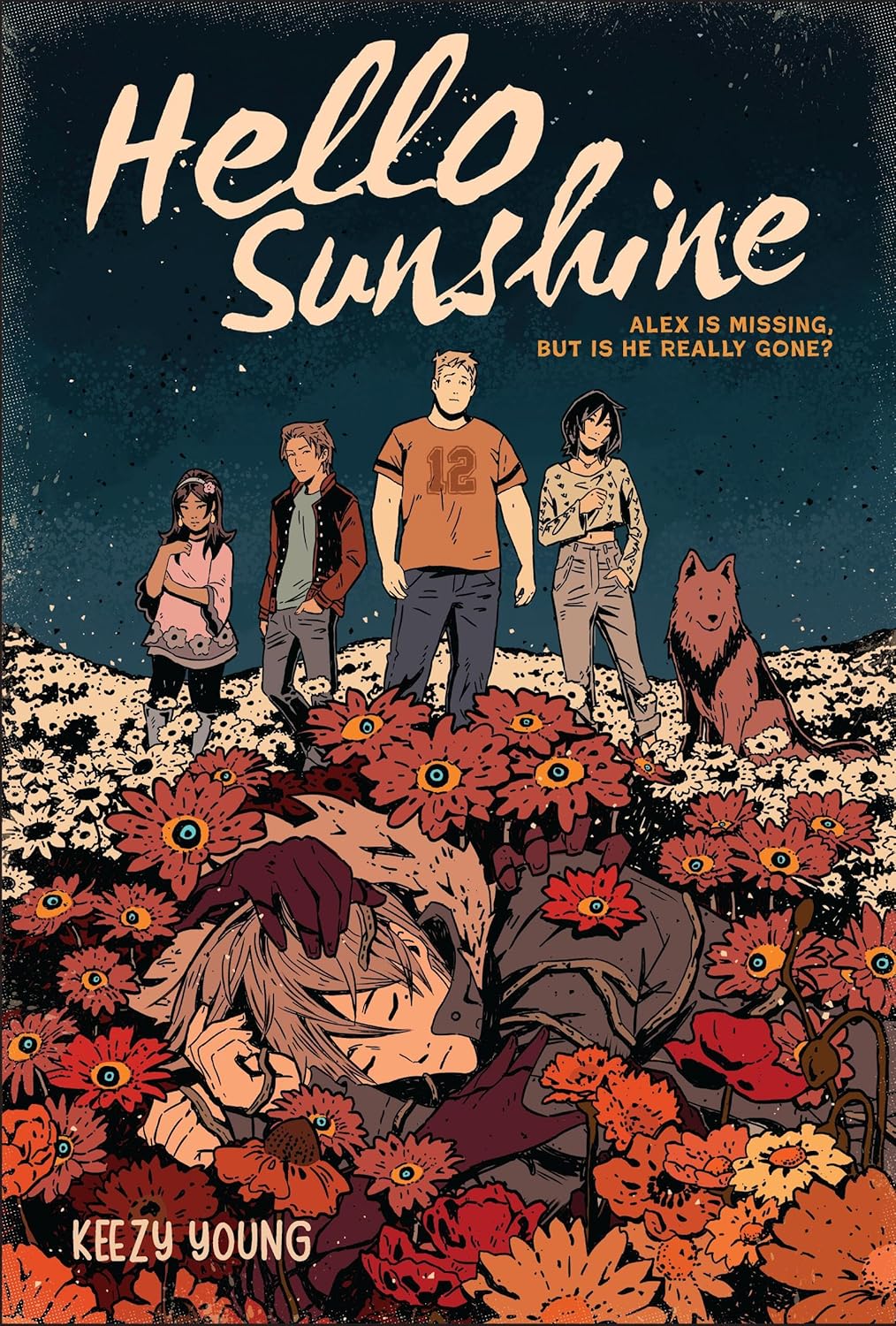
Those who liked the messy mental health trials and tribulations of Keezy Young's Hello Sunshine will like this difficult book of sorting-through-the-aftermath. Those who liked the hard choices of Heather Kamins's The Moth Girl will like this new story of chronic illness and heavy medical hardships.

|
Details
|
Note: I was provided with an ARC by the publisher through Netgalley in exchange for an honest review. All opinions here are my own. |


Your last statement about Ella, made me laugh.
ReplyDeleteLol - I don't usually react so strongly to a character, but here we are!
DeleteWow. I love this review because it speaks of how much you felt things while reading this book, but at the same time it's as well-articulated as each and every review you've written before. I get the younger sibling problem...it's a typical one in YA and adult books (sometimes even in MG itself!). Like you, I usually don't find it to be a dealbreaker, but it can be jarring.
ReplyDeleteDefinitely not a dealbreaker, but more authors need to take the time to actually talk to kids, you know? Then they might sound right.
DeleteWow, that is messy. Poor guy
ReplyDeleteDefinitely a complicated set of circumstances!
DeleteIt sounds like you really got into this book. Thank you so much for sharing your review.
ReplyDeleteThanks for stopping by!
DeleteWhen a child grows up without reliable narrator parents, life is shaky from the start. Thanks for reading and reviewing this book!
ReplyDeleteIt definitely doesn't set one up for success, right? And this book kind of works through the messy aftermath.
DeleteThis sounds like a heartbreaking read. It sounds really good though. Great review!
ReplyDeleteIt's a difficult read, but I think it was worth it!
DeleteWow, this sounds so good. I immediately added it to my TBR!
ReplyDeleteGlad it spoke to you! I read so many different types of books, I know not all my reviews will be of interest to my regular readers.
Delete